


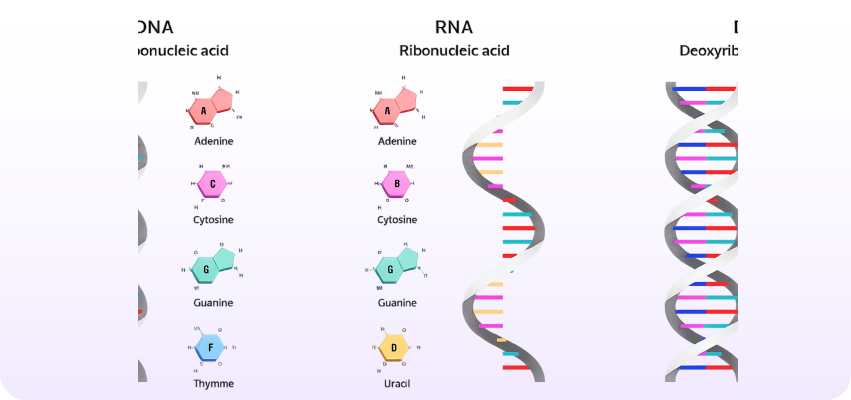
Hybridization is a key molecular process in biology and biotechnology, but so far there is no predictive model for accurately determining hybridization rate constants based on sequence information.
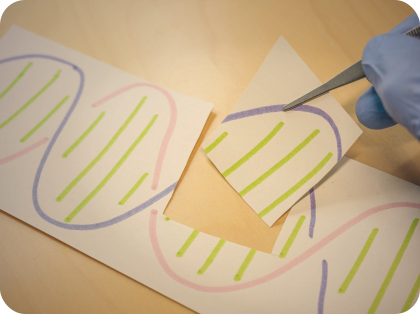
Simulation-guided DNA probe design for consistently ultraspecific hybridization
Hybridization of complementary sequences is one of the central tenets of nucleic acid chemistry; however, the unintended binding of closely related sequences limits the accuracy of hybridization-based approaches to analysing nucleic acids.
Conditionally fluorescent molecular probes for detecting single base changes in double-stranded DNA
Small variations in nucleic acid sequences can have far-reaching phenotypic consequences.
Optimizing the specificity of nucleic acid hybridization
The specific hybridization of complementary sequences is an essential property of nucleic acids, enabling diverse biological and biotechnological reactions and functions.
Dynamic DNA nanotechnology using strand-displacement reactions
The specificity and predictability of Watson–Crick base pairing make DNA a powerful and versatile material for engineering at the nanoscale.