


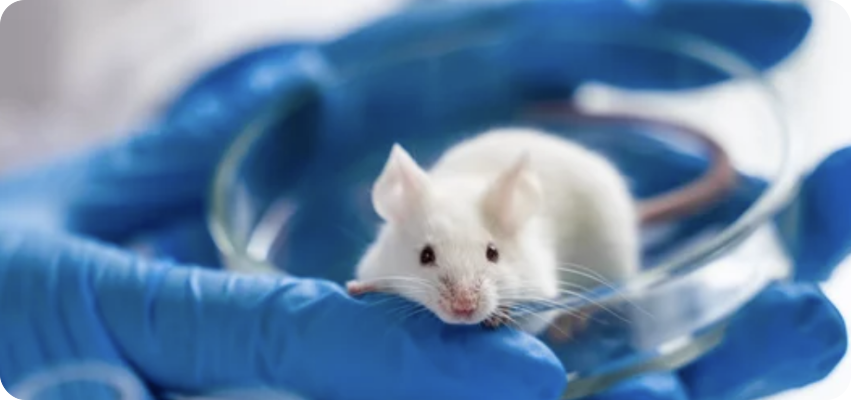
Screening implantable biomaterials for antifibrotic properties is constrained by the need for in vivo testing.
Limitations and opportunities of technologies for the analysis of cell-free DNA in cancer diagnostics
Cell-free DNA (cfDNA) in the circulating blood plasma of patients with cancer contains tumour-derived DNA sequences that can serve as biomarkers for guiding therapy, for the monitoring of drug resistance, and for the early detection of cancers.
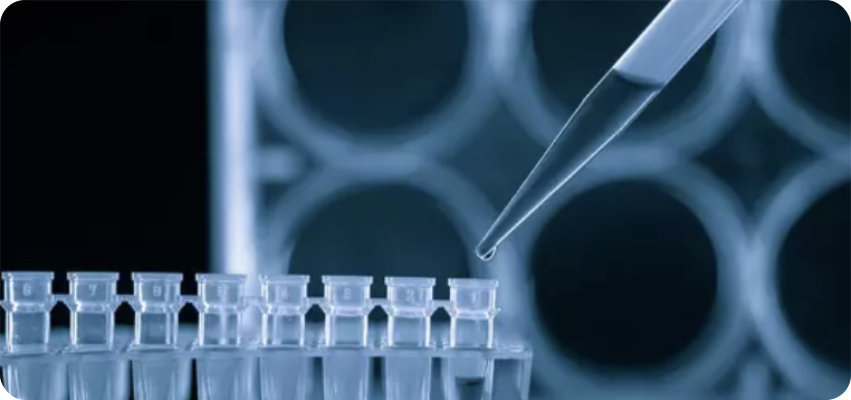
Highly multiplexed rapid DNA detection with single-nucleotide specificity via convective PCR in a portable device
Assays for the molecular detection of nucleic acids are typically constrained by the level of multiplexing (this is the case for the quantitative polymerase chain reaction (qPCR) and for isothermal amplification), turnaround times (as with microarrays and next-generation sequencing), quantification accuracy (isothermal amplification, microarrays and nanopore sequencing) or specificity for single-nucleotide differences (microarrays and nanopore sequencing).
Selective multiplexed enrichment for the detection and quantitation of low-fraction DNA variants via low-depth sequencing
DNA sequence variants with allele fractions below 1% are difficult to detect and quantify by sequencing owing to intrinsic errors in sequencing-by-synthesis methods.
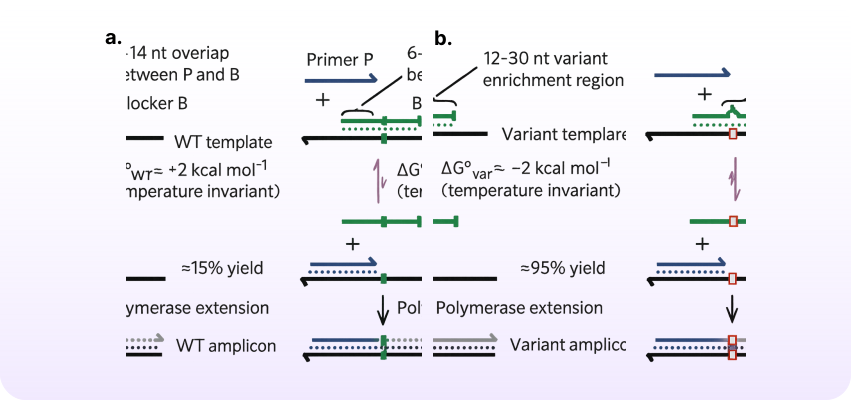
Multiplexed enrichment of rare DNA variants via sequence-selective and temperature-robust amplification
Rare DNA-sequence variants hold important clinical and biological information, but existing detection techniques are expensive, complex, allele-specific, or don’t allow for significant multiplexing.